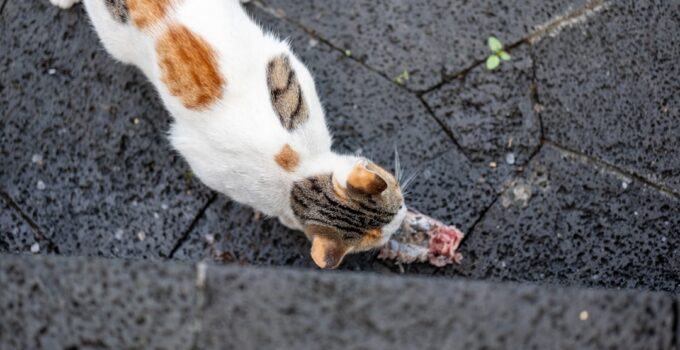
Have you ever wondered why your cat sometimes leaves a less-than-ideal offering at your door? It’s a typical, and frequently perplexing, cat behavior. To put it succinctly, when your cat brings dead animals home, it’s typically a mix of instinct and a somewhat misguided attempt to teach you or show affection. The natural calling of the hunter’s instinct.
Despite their domestication, cats still have strong predatory tendencies. It has been refined over thousands of years & is a fundamental component of their DNA. Even well-fed indoor cats occasionally feel the need to hunt. The thrill of pursuit. For a cat, the entire hunting process—stalking, pouncing, and catching—is immensely satisfying.
Understanding why cats bring home dead animals as gifts can be a fascinating topic for pet owners. If you’re interested in exploring the broader concept of mastering new skills, you might find the article on how long it takes to master a new skill particularly insightful. It provides valuable insights into the learning process, which can be applied to understanding animal behavior as well. You can read more about it in this article.
It uses their old programming to give them a mental and physical workout. A strong sense of accomplishment is generated by a successful hunt. Getting the Skills Right. If a kitten were to live in the wild, they would need to practice hunting techniques to survive. The instinct still exists even if they have never had to hunt for food.
They can “practice” and hone these natural skills by bringing prey home. It’s about perfecting the technique, much like when a musician practices scales. Handling and Choosing Prey. Also, you can learn something from what a cat decides to bring home.
Common targets include rodents and small birds. They are difficult enough to be fascinating due to their size & agility, but they are also easy to capture and carry. They hunt with a certain amount of care, as evidenced by the way they carry their prey—often gently in their mouth. Taking care of the family is the “It’s for You” aspect. This is the true application of the “gift” interpretation.
Understanding the behavior of cats can be quite intriguing, especially when it comes to their instinct to bring home dead animals as gifts. For those looking to delve deeper into the fascinating world of animal behavior, you might find it helpful to explore related topics, such as the nuances of communication in pets. A great resource for enhancing your vocabulary and understanding of language can be found in this comprehensive guide to synonyms, which can aid in articulating your thoughts on these behaviors more effectively.
Your cat views you as a member of their family and social circle. Also, a successful hunter in the wild divides their gains with their mates or littermates. The Bounty is shared. From your cat’s point of view, consider it.
They have accomplished a noteworthy feat by successfully hunting. They view you as family, so who better to share this accomplishment with than the other members of their household? They are also sharing their hunting skills with you. A Survival Teach.
A popular theory is that your cat is attempting to “teach” you how to hunt. They’re bringing you a meal because you don’t seem to be very good at catching your own food (you’re always eating processed kibble!). In this instance, an adult cat feeding a rather incompetent human is similar to a parent bird feeding its fledgling. They may be attempting to teach you their expert hunting techniques because they think you’re not ready for the wild.
demonstrating their value. Your cat may use this offering to show the group how valuable they are. They are demonstrating their ability to provide and contribute to the well-being of the household by bringing back prey. It shows how proud they are of their skills and how much they want to be accepted by their social group.
Seeking recognition is the “Look What I Did!” factor. Cats are intelligent animals that react favorably to rewards. They may try to get you to react by bringing home prey, which they may take as compliments. The anticipation of a response.
You will most likely react when you find the “gift.”. You could shout, yell, gasp, or even go up to the animal. Even though this attention sounds negative, it is still a form of engagement for your cat.
They believe they’ve accomplished something amazing, and they’re receiving a lot of attention. loop of positive reinforcement. They may discover that their actions are noticed if you react angrily when they bring something home and then clean it up without being overly critical (which can be difficult to avoid!). Even if it’s just a sigh and a trip to get a shovel, this can eventually become a learned behavior, particularly if they associate your response with attention. The Depth of “Praise”.
They are not necessarily anticipating a standing ovation. It’s all about social contact. They wish to tell you about their accomplishment and their experience. Regardless of the content, your instant attention satisfies this social need. “Look at this amazing thing I accomplished! Aren’t you impressed?” is what they are saying.
Examining the “Gift” Concept: Appreciation isn’t the only factor. Although we tend to romanticize the concept of a “gift,” it’s crucial to keep in mind that cats are motivated by instinct and their perception of their social environment rather than by human notions of sentimentality. More instinct than affection (mostly). This is primarily motivated by instinct.
There is a strong desire to hunt & return with prey. The initial act is motivated by something much more basic, even though they may associate bringing prey with positive interactions with you. It is essential to biology. Style of Communication.
Consider attempting to converse with someone who doesn’t speak the same language as you. You and your cat are engaging in a similar activity. They are attempting to express their abilities as well as possibly their needs or desires by using their most primal behaviors.
Their way of communicating is through the dead animal. The “Gift” is interpreted by humans. Human emotions are projected onto animal behavior.
Even though the behavior might be seen as a gift or a sign of affection, it’s important to comprehend the underlying feline motivations. Their “gift-giving” is not a deliberate display of love in the human sense, but rather a result of their instincts. It’s their most passionate method of demonstrating their abilities.
Handling the Behavior: How to Handle a Hunting Cat. It takes comprehension and some strategic management to deal with these unwanted offerings. Containment & cleanup should be done right away. The best course of action is to remove the “gift” quietly, effectively, and without creating a big commotion.
This keeps people from admiring (or disgusting) the animal for an extended period of time and serves as a reminder that this isn’t always the intended result. When disposing of the animal, use a shovel and gloves. Your cat may become confused and anxious if you reprimand them. Punishment is unlikely to work because they are acting on instinct.
Reducing Hunting Opportunities: Addressing the Core Cause. Reducing your cat’s hunting opportunities is the best way to lessen these incidents. indoor-only way of living.
The simplest solution for many cat owners is to keep their furry friends only inside. Potential prey is totally cut off as a result. The safety advantages—avoiding traffic, predators, illnesses, and fights—often exceed the perceived drawbacks, despite the claims of some that this is unnatural. There can be a lot of stimulation in a well-enriched indoor environment. Collars with bellies or other deterrents. Consider getting your cat a bell-equipped safety collar if they have to go outside.
Sometimes the jingling bell can let prey know that your cat is approaching, increasing the likelihood that they will flee. Also, there are unique ultrasonic devices and reflective collars, though their efficacy varies. Interactive Play Sessions. Use toys that imitate prey to get your cat involved in frequent, active play sessions. Stuffed mice, feather wands, & laser pointers (used carefully and followed by a material reward) can satiate their hunting urge in a secure, indoor setting. Aim for sessions that resemble the sequence of stalking and pouncing.
Enriching the indoor environment for cats. An indoor cat that is bored is more likely to become fixated on any chance to hunt. vertical area. Cats enjoy climbing and taking high views of their surroundings. Provide perches, shelves, and trees for cats. They are able to act in an exploratory and observational manner as a result.
Feeders for puzzles. Use puzzle feeders to add a challenge to mealtimes. These provide mental stimulation by making your cat “work” for their food, simulating the effort of hunting. Rotation and Various Toys. Regularly switching up your cat’s toys will keep them engaged.
Add fresh sounds, forms, & textures. It is essential to have a range of toys that promote various forms of play. Recognizing the Breed & Character of Your Cat. Certain cat breeds are more likely than others to hunt. Breeds with robust genetic hunting lines, for instance, may be more motivated. Likewise, a person’s personality matters.
A bold, gregarious cat may be more likely to bring their treats home than a shy one. Understanding these inclinations will enable you to predict & control the behavior. Recognizing the Instinct: The Unavoidable Truth. Even with all the enrichment and safety measures, some cats will always have a strong hunting instinct.
If your cat sometimes brings home a “gift,” try to be understanding. Their innate skills are demonstrated by this. Recognize their instincts, handle the situation coolly, and concentrate on creating a stimulating and safe space where they can indulge their predatory tendencies in healthier ways.
.