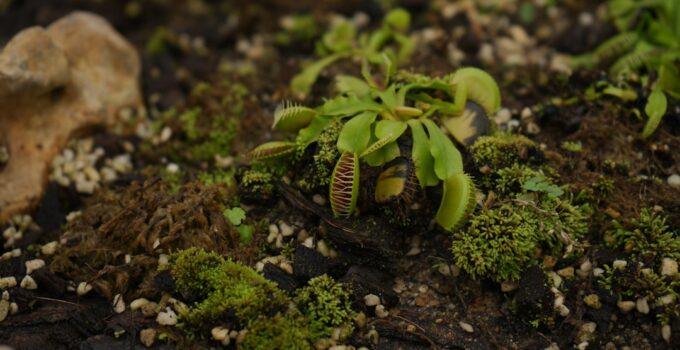
You’re probably wondering why some plants decided to go all Audrey II and start eating bugs. The short answer is: they live in nutrient-poor soil and evolved a clever workaround to get the good stuff. Think of it like a plant that lives on a diet of bland crackers all the time. Eventually, it’s going to find a way to get some protein in there.
This article will delve into the fascinating world of carnivorous plants, exploring the “why” behind their predatory nature. We’ll look at their habitats, how they developed their insectivorous ways, and the incredible variety of traps they’ve come up with.
The primary driver behind plant carnivory is a lack of essential nutrients in their native soil. These aren’t just a little low; we’re talking severely deficient, especially in nitrogen and phosphorus.
Nutrient Scarcity: The Defining Factor
Imagine a bog. It’s often waterlogged, acidic, and the organic matter breaks down very slowly. This creates an environment where a lot of nutrients are locked up or simply not available to plant roots.
- Bogs and Swamps: These are prime real estate for carnivorous plants. The constant waterlogging depletes oxygen, slowing down decomposition and making nitrogen and phosphorus hard to come by.
- Sandy Soils: Some carnivorous plants, like certain sundews, thrive in sandy, acidic soils that are naturally poor in nutrients. The sand drains quickly, further leaching away any available goodness.
- Rock Outcrops: High-altitude or exposed rocky areas can also be nutrient deserts, forcing plants to get creative.
Evolution as a Solution
Plants don’t just wake up one day and decide to eat insects. This is a result of millions of years of evolution, where small advantages led to increasingly specialized adaptations.
- Incremental Benefits: Imagine a plant with slightly sticky leaves. If a few small insects got stuck and decomposed on its leaves, providing a tiny nutrient boost, that plant might have a slight edge over its non-sticky neighbors.
- Natural Selection at Play: Over generations, plants with more effective trapping mechanisms would be more likely to survive and reproduce in nutrient-poor environments, passing on those beneficial traits. This is natural selection in action.
If you’re intrigued by the fascinating world of carnivorous plants and want to dive deeper into their unique adaptations and survival strategies, you might find this related article on streaming services interesting. It explores how to access various nature documentaries that showcase these extraordinary plants in their natural habitats. For more information, check out the article here: How to Stream FuboTV.
How Carnivory Evolved: A Step-by-Step Process
Understanding the “why” also requires understanding the “how.” It wasn’t a sudden leap but a gradual progression of adaptations.
From Passive Stickiness to Active Traps
The journey from a regular plant to a carnivorous one likely started with simple, non-specialized traits that accidentally caught insects.
- Sticky Hairs (Glandular Trichomes): Many plants have glandular hairs that excrete sticky substances, often as a defense mechanism against herbivores or to reduce water loss. Think of a petunia’s slightly tacky leaves. If an insect got stuck on one of these, it might decompose and release a tiny amount of nutrients.
- Leaf Modifications for Water Collection: Some plants have cupped leaves to collect rainwater. If insects drowned in these pools, the plants could potentially absorb some of the released nutrients.
The Development of Digestive Enzymes
Simply trapping an insect isn’t enough; the plant needs to extract the nutrients. This is where digestive enzymes come into play.
- Early Stages of Decomposition: Initially, the decomposition of trapped insects might have been primarily due to bacteria and fungi. The plant would then absorb the simpler compounds released by these microbes.
- Internal Enzyme Production: Over time, plants evolved to produce their own digestive enzymes, similar to those found in animal stomachs. This made the process much more efficient and less reliant on external microbes. These enzymes break down the insect’s proteins and chitin into usable forms like amino acids and phosphates.
The Incredible Diversity of Traps
Carnivorous plants are not a single evolutionary lineage; rather, the trait of carnivory has evolved independently multiple times in different plant families. This has led to a dazzling array of trapping mechanisms.
Pitfall Traps: The Slippery Slope
These plants lure insects into a deep, often liquid-filled chamber from which escape is difficult.
- Pitcher Plants (Nepenthes, Sarracenia, Cephalotus): These are the classic examples. Their leaves are modified into pitcher-shaped structures.
- Nectaries and Coloration: The rim (peristome) of the pitcher often produces nectar and is brightly colored, attracting insects.
- Waxy, Slippery Interiors: The inside of the pitcher is typically very smooth and waxy, making it almost impossible for insects to get a foothold once they’ve fallen in.
- Digestive Fluid: The bottom of the pitcher contains a liquid with digestive enzymes and sometimes symbiotic bacteria that aid in breaking down the prey.
- Downward-Pointing Hairs: Some species have downward-pointing hairs that further impede escape.
Flypaper Traps: The Sticky Situation
These plants rely on sticky glands to ensnare their prey.
- Sundews (Drosera): Perhaps the most iconic flypaper traps.
- Glandular Tentacles: Their leaves are covered in glistening tentacles, each tipped with a sticky, mucilage-producing gland.
- Mucilage as Glue: This mucilage not only traps insects but also contains digestive enzymes.
- Tentacle Movement: Many sundew species exhibit movement, with tentacles slowly bending inward to bring the prey into contact with more digestive glands, maximizing nutrient absorption.
- Butterworts (Pinguicula): These plants have flat, often succulent leaves covered in two types of glands.
- Peduncular Glands: These produce a sticky mucilage that traps insects, much like sundews.
- Sessile Glands: These are smaller and produce digestive enzymes, breaking down the trapped prey.
- Subtle Leaf Rolling: Some butterworts exhibit a slight, slow rolling of their leaf margins to contain trapped prey and prevent rainwater from washing away nutrients.
Snap Traps: The Quick Close
These are perhaps the most dramatic and well-known traps, characterized by rapid movement.
- Venus Flytraps (Dionaea muscipula): The undisputed king of snap traps.
- Modified Leaves: The trap consists of two hinged lobes, each with several sensitive trigger hairs.
- Trigger Hairs: When an insect touches two different trigger hairs within about 20 seconds, or the same hair twice in quick succession, the trap snaps shut. This mechanism prevents the trap from closing on non-prey items like raindrops.
- Interlocking “Teeth”: Along the edges of the lobes are stiff, interlocking “teeth” that prevent the prey from escaping.
- Digestive Glands: Once the trap is sealed, glands on the inner surface release digestive enzymes. The trap reopens after several days when digestion is complete.
- Waterwheel Plants (Aldrovanda vesiculosa): An aquatic relative of the Venus flytrap, using a similar snapping mechanism to catch small aquatic invertebrates.
Bladder Traps: The Vacuum Cleaners of the Plant World
These aquatic or terrestrial plants use a unique suction mechanism.
- Bladderworts (Utricularia): A diverse genus found worldwide.
- Bladders: Their traps are small, hollow bladders with a hinged door and sensitive trigger hairs around the opening.
- Vacuum Action: When an aquatic insect or protozoan touches the trigger hairs, the bladder door rapidly opens inward, creating a vacuum that sucks in water and the unfortunate prey. The door then snaps shut. This process takes milliseconds.
- Digestive Glands: The inner surface of the bladder is lined with glands that absorb nutrients from the digested prey.
Corkscrew Traps: The Underground Labyrinth
Less visually dramatic, these traps work underground.
- Genlisea (Corkscrew Plants): These plants have a unique, Y-shaped underground trap.
- Spiral Entry: One arm of the “Y” extends into a spiraling, hollow tube.
- Inward-Pointing Hairs: The inside of this tube is lined with inward-pointing hairs, preventing prey from turning around.
- Digestive Chamber: Microscopic organisms, like protozoa, are guided deeper into the trap until they reach a digestive chamber where enzymes break them down.
Beyond the Traps: Adaptations for a Carnivorous Lifestyle
It’s not just about the traps; carnivorous plants have other adaptations that support their unusual diet.
Specialized Roots or Lack Thereof
Since they get most of their nutrients from prey, their root systems are often reduced or specialized.
- Reduced Root Systems: Many carnivorous plants have surprisingly small or simple root systems compared to non-carnivorous plants of similar size. They are primarily for anchorage and water absorption, not nutrient uptake.
- Adventitious Roots: Some, like certain pitcher plants, may develop adventitious roots for climbing or support rather than deep nutrient foraging.
Unique Relationships with Microbes
Some carnivorous plants form symbiotic relationships to aid digestion.
- Bacterial Symbionts: In some pitcher plant species, specific bacteria live within the digestive fluid of the pitcher. These bacteria help to break down the tough exoskeletons of insects, making it easier for the plant’s enzymes to do their job and for the plant to absorb nutrients. Think of them as tiny, helpful gut bacteria for the plant.
- Protozoan Communities: The fluid in many pitcher plants also hosts complex communities of protozoa, rotifers, and other small organisms that contribute to the breakdown of prey. While not always a direct symbiosis, their activity benefits the plant by accelerating nutrient release.
If you’re curious about the fascinating world of carnivorous plants and want to delve deeper into their unique adaptations and survival strategies, you might find it helpful to explore related topics that enhance your learning experience. For instance, you can check out this article on speeding up your studying, which offers valuable tips that can aid in understanding complex subjects like plant biology. By applying effective study techniques, you can better grasp why some plants have evolved to become carnivorous and how they thrive in nutrient-poor environments.
Misconceptions and Interesting Facts
Let’s clear up a few common myths and share some cool tidbits.
Not All Fly Traps Are Carnivorous
Just because a plant catches insects doesn’t mean it’s carnivorous. Some plants might accidentally trap insects but lack the ability to digest them. They are merely “adhesively challenged” but not predatory.
- “Proto-carnivorous” Plants: These plants trap insects but don’t produce their own digestive enzymes. They might rely on external microbes or simply gain no benefit from the trapped insects. Ibicella lutea (the Devil’s Claw) is a good example; its sticky leaves catch insects, but it doesn’t digest them.
They Don’t Eat People (Usually)
The image of a man-eating plant is pure fiction. While some pitcher plants can catch small vertebrates like frogs or lizards, these are typically accidental catches and not their primary food source. Their traps are designed for insects.
The “Sweet Spot” of Carnivory
Being carnivorous is energetically expensive. Building traps, producing enzymes, and in some cases, moving parts requires energy.
- Energy Balance: Carnivorous plants only thrive in conditions where the benefits of catching prey (nutrient gain) outweigh the energy cost of being carnivorous. If nutrients were plentiful in the soil, there would be no evolutionary advantage to expending energy on traps.
- “Facultative” Carnivores: Some plants might exhibit partial carnivory, supplementing their diet with insects when soil nutrients are scarce but relying more on roots when nutrients are available. This flexibility can be an evolutionary advantage.
So, the next time you see a Venus flytrap or a pitcher plant, remember that it’s not being “mean” to bugs. It’s simply a testament to evolution’s ingenuity, a clever plant finding a way to thrive in the most challenging of environments. It’s a tale of survival, adaptation, and a bit of botanical mischief!